
FourmiPharm
Dietary Supplements to Combat Aging
by John Walker

|
|
FourmiPharmDietary Supplements to Combat Agingby John Walker |
|
“Come on you apes! You wanna live forever?”
Works for me! Who in their right mind doesn't want to enjoy a long life, filled with health and energy to make the most of all the fine things life has to offer? A substantial part of a long, healthy lifespan is luck: the genetic hand you were dealt at conception, avoiding accidents and wars, or dodging exposure to serious infectious diseases, but there are many things you can do which affect how long you'll live and how healthy you'll be in the years you're granted on this planet and, perhaps, others. And yet, when you look around, you'll see lots of people whose behaviour seems to indicate they don't care much about their lifespan or the quality of the years they're granted: they're too fat, never exercise, smoke, drink to excess, abuse drugs, or consume excess amounts of foods not known to our ancestors which stress the body's systems leading to preventable diseases.
Well, to heck with them—lovers of liberty like ourselves draw a clear line between what we prescribe for ourselves and what we presume to exhort (or, even more destructively) compel others to do. Besides, they'll all be reading this page after the consequences of their dissipation inevitably catch up to them. So, we've all dealt with the weight problem, are getting a reasonable amount of exercise without obsessing over it or undertaking something we're sure to abandon because it doesn't fit with the life we choose to live and the demands it places upon us, munch more or less healthy stuff in reasonable quantities, and aren't indulging in the pernicious stuff to a damaging extent. (I have no interest whatsoever in people with such puckered souls that they'd turn their nose up at an ice cream cone at the county fair or a chili dog at the family reunion; their living long lives only prolongs the misery to which they've sentenced themselves and the discomfort their narcissistic abnegation inflicts upon those unlucky enough to endure their presence.)
In the sections below, I have linked individual supplements with descriptions of them and, to a capsule icon, a source for buying them. I have no commercial relationship other than as a customer with the vendors linked below; I have found them reliable and competent in international shipping, but your experience may differ; in particular, nanny states may deem you unqualified to decide what nutrients you choose to ingest. I have but one prescription for this: tar, feathers, rail. Note that some of the supplements linked to supply a submultiple of the daily dose listed; in such cases, you'll have to take more than one pill per day.
This is a description of my own experience with nutritional supplementation, which is proffered only for your own edification, not as a recommendation for your own use. Everybody, and every body, is different, and there is no one-fits-all prescription for anything. You are the sole arbiter of your own destiny; if you take any of these pills (all of which are available over the counter in what purport to be free countries in this decadent nanny-state age) and drop dead, then that's your problem, so to speak, not mine.
A good deal of this program was developed based upon information presented at the First Personalized Life Extension Conference in October 2010. I did not attend this conference, as I no longer travel to subprime countries, but watched I the live Webcast. I hope that a DVD edition of these presentations will eventually become available; there is a wealth of information presented there which is of interest to anybody who wishes to prolong and make the most of their life.
You can scarcely imagine how little interest I have in debating the details of this document with partisans of this or that ephemeral dietetic enthusiasm. If you have something to contribute to this discourse, please avail yourself of the feedback button at the bottom of the page. If you want to assail my choices (which are not recommendations), please send your messages, with a dozen copies in ALL CAPITALS just to be sure, to poubelle@ratburger.org.
I have grouped the supplements into general categories, but be aware that there is substantial overlap and that others may differ on how to classify them. For example, a number of substances which act as anti-oxidants also have effects on immune system performance, aerobic energy generation in mitochondria, and other metabolic processes.
| Multivitamin/mineral | 1 each |
| Vitamin C | 1 g |
| Vitamin D-3 | 2000 IU |
| Folic acid | 800 μg |
| Astragalus extract | 500 mg |
| Vitamin E | 400 IU |
| Vitamin K | 100 μg |

A broad spectrum one-per-day multivitamin and mineral formulation is the foundation of any supplement plan. Most of these supply a substantial fraction of Reference Daily Intake (RDI) of the basic vitamins and trace minerals you should get from a well-balanced diet. Think of a multivitamin as serving as a backstop to avoid inadvertent deficiencies due to what you happen to be eating. Due to the physical limits imposed by the size of a pill people are willing to swallow, multivitamins tend to be short on bulky nutrients such as calcium, magnesium, and essential fatty acids—these are best supplied by specific supplements discussed below. When I lived in California, I used to buy Safeway multivitamins because they were inexpensive and comparable in content to the heavily-marketed brands. I presently use an iron-free multivitamin purchased on-line.
Although most multivitamins provide 100% or more of the RDI for Vitamin C, there is persuasive evidence that this nutrient, a powerful antioxidant, has many beneficial effects in substantially larger doses. Indeed, doses much larger than the RDI are required to achieve a blood serum level equivalent to that in mammals which synthesise their own Vitamin C (humans and apes are in the minority of species which have lost this capability). I've been taking one gram of Vitamin C every day since the 1980s, and it's been my experience that I get substantially fewer colds than I did before. Vitamin C is water soluble and not retained in the body, so there is minimal risk in taking too much: you're simply wasting your money making expensive urine. I get most of my colds when forced to endure airline travel, and I usually take two grams of Vitamin C on the days around such ordeals; I have no idea whether this helps, but it can't hurt.
People who live in temperate climes or closer to the pole have a high incidence of Vitamin D deficiency, especially in the winter or if they don't get out much in the sun. The darker your skin, the more likely you are to be deficient in Vitamin D, since melanin blocks the ultraviolet light necessary to synthesise this nutrient in the skin. You don't want to be deficient in Vitamin D, as it's essential in regulating calcium metabolism in the body. If you're short on Vitamin D, whatever calcium you ingest tends to end up in your soft tissue (including hardening and constricting your arteries) instead of your bones, and can result in weakening of the bones, particularly in elderly people. The best way to determine the optimum dose of Vitamin D is to have a blood test which measures your actual level and then adjust the supplement dose until it's in the middle of the recommended range (ask your doctor for a 25-OH-D test and tune supplements to obtain a value of around 60 ng/mL), but even though Vitamin D is toxic in overdoses, a huge sustained dose of 50,000 International Units (IU) per day is required to produce symptoms in healthy adults. I've settled on 2000 IU per day, which is just twice the recommended upper limit for infants, and entirely safe for a big ape like me.
Folic acid is usually obtained from deep green leafy vegetables. If you don't eat enough of them, you're prone to a folic acid deficiency which can cause double strand chromosome breakage equivalent to large doses of ionising radiation. There is little risk of overdose of folic acid because it is water-soluble and any excess is excreted in urine. An overdose of folic acid can mask the effects of a vitamin B12 deficiency, but if you're taking a multivitamin this won't be a problem and in any case the folic acid supplement I cite here is less than the dose at which this becomes a risk.
I stumbled onto astragalus after discovering that it is the source of TA-65, which is the only supplement of which I am aware which purports to mitigate the inexorable erosion of telomeres, which seems, at present, to pose the ultimate limit on the number of viable cell divisions and hence the lifespan of metazoans. Well, it turns out that astragalus contains a negligible quantity of TA-65: one must process tons of the root to obtain a biologically significant quantity of the TA-65 molecule. But astragalus has long been said to enhance the functioning of the immune system, and since that correlates with just about every other measure of health and lifespan, I decided to include it in my regime.
At the moment, TA-65 is a proprietary preparation available only as part of a clinical trial through a limited number of physicians at an extremely elevated price. I'm sure that once the identity of the molecule in question leaks out, we'll be able to buy generic versions from China (where astragalus is grown), doubtless enriched with lead, thallium, and other fine ingredients.
Vitamin E is a powerful antioxidant which can reduce oxidative stress and hence the effects of aging on a systematic basis. Vitamin E is a term encompassing a family of tocopherol and tocotrienol compounds. The best studied of these is α-tocopherol, the main ingredient in most Vitamin E supplements. There is evidence that a balanced mix of the variants of Vitamin E is better than a supplement consisting of just the alpha compound, and that a maximum daily dose exceeding 400 IU per day compromises immune function and increases the risk of death.
Vitamin K was named for its function in blood coagulation, which is spelled with a “k” in the languages of the Danish researcher who discovered it and the German journal in which his results were published. Like so many important vitamins, it is abundant in green, leafy vegetables. Vitamin K deficiency is associated with osteoporosis and heart disease. In the absence of allergy, there is no documented risk from an overdose of Vitamin K.
| EGCg Green Tea Extract | 400 mg |
| Resveratrol | 100 mg |
| Alpha Lipoic Acid | 300 mg |
| Zeaxanthin+Lutein | 4 mg Zeaxanthin 12 mg Lutein |
| Astaxanthin | 4 mg |
| Quercetin | 500 mg |
Green tea, made from the leaves of the plant Camellia sinensis, contains a number of substances, principally catechins, which are powerful anti-oxidants. Green tea extracts have been shown to be more powerful antioxidants than vitamins C and E, and there is evidence they have an anticarcinogenic effect and suppress chronic inflammation as well. If you drink green tea, it is important not to brew it with water which is too hot, as this destroys the beneficial compounds in the tea leaves. Green tea extract supplements are processed to avoid this problem; the supplement I cite above is equivalent to about two or three cups of green tea. Green tea contains caffeine, but decaffeinated green tea extract supplements contain less caffeine than a cup of “decaffeinated” coffee. This the only caffeine I ingest.
The compounds in green tea extract can interact in deleterious ways with some anticancer drugs, and may contribute to the risk of neonatal leukemia in infants born to women who ingested them while pregnant. People in these circumstances should seek the advice of a competent physician before taking this supplement.
Resveratrol is a compound found in red wine (originating in the skin of the wine grapes) which has been suggested as an explanation of the French paradox: why the French, whose diet, rich in saturated fats, is considered by many hairshirt ascetic food fanatics to be an express lane ticket to the coronary ward, have a relatively low incidence of heart disease. Further research suggests that the levels of resveratrol found in red wine are insufficient to account for the puzzle, but that doesn't mean that resveratrol, in larger doses, isn't beneficial. In tests in model organisms, resveratrol has been shown to extend lifespan, reduce inflammation, lower cancer risk, and decrease blood sugar. In some tests it appears to mimic the effects of calorie restriction, which is the only well-documented path to life extension.
Alpha lipoic acid has been studied in clinical tests since the 1950s and has been demonstrated to be effective in treating a multitude of conditions. It has a strong antioxidant effect, and has been used for that purpose as an additive in cooking oils and lard. It has also been reported to increase energy and reverse age-related markers in old rats to youthful levels when administered along with acetyl L-carnitine. No RDI has been established for alpha lipoic acid, and it is considered nontoxic unless taken in absurd overdoses.
Zeaxanthin and lutein are the two principal carotenoid compounds found in the retina of the eye. In the macula, used for central vision, zeaxanthin predominates, while in the balance of the retina, devoted to peripheral vision, lutein is more abundant. These two molecules are isomers of one another: they have the same atomic composition and structure, and differ only in the location of a double bond in one of the end carbon rings. Both compounds serve as antioxidants within the eye, and some studies indicate that a diet rich in them may prevent the development and/or progression of age-related macular degeneration, one of the principal causes of visual impairment in older adults. Both of these compounds are present in the lens of the eye, and may act, as antioxidants, to retard the development of cataracts, but there is no conclusive evidence for this at present. As with so many micronutrients, zeaxanthin and lutein are abundant in deep green leafy vegetables such as spinach, turnip greens, and kale. For those whose diet doesn't include these on a regular basis, a supplement makes sure you aren't deficient. As these are both compounds found in vegetables, you're at no more risk of an overdose from supplements than from pigging out on spinach—no reports of overdoses have been published.
Astaxanthin is a carotenoid compound with powerful antioxidant and anti-inflammatory properties. It protects against age-related macular degeneration and cataracts in the eye, lowers blood pressure, and suppresses carcinogenesis and tumour growth in rats and mice. Salmon is rich in astaxanthin—it is responsible for the pink colour of the flesh (as well as the colour of flamingos and cooked shrimp and lobsters). None of these species synthesises astaxanthin; they concentrate it from microorganisms and insects they eat. The green microalgae Hæmatococcus pluvialis is a rich natural source of astaxanthin and many supplements contain an extract of this easily-cultured organism. A supplement of 4 mg of astaxanthin contains as much of the compound as 800 grams of Atlantic salmon. There are no reports of either overdoses or adverse reactions to astaxanthin.
Quercetin is a flavonol compound found in onions, red wine, and green tea. It is a powerful antioxidant and also has anti-inflammatory properties and may reduce symptoms of allergies. It has been claimed to protect against cardiovascular disease and cancer, but there is no evidence for this in studies on humans.
| Omega-3 Fish Oil | 2 g |
| Glucosamine/Chondroitin/MSM | 3 g/2.4 g/1.6 g |
This stuff is just fantastic. Omega-3 fatty acids interact with omega-6 in complicated ways, but the key point is that most people on a contemporary Western diet are deficient in omega-3. (There are blood tests which enable you to measure your own actual balance of essential fatty acids, but they are not commonly ordered and your doctor may not know about them.) Published studies show correlations between omega-3 supplementation and reduction in risk of cancer and cardiovascular disease, improved immune system performance, and reductions in inflammation. My experience with the latter was dramatic. Ever since I performed a particularly ugly pratfall on an icy driveway about a decade ago, I've had chronic pain in my left knee which, on bad days, required me to regularly shift its position to keep the pain in check. Well, about a month after I started taking two grams of fish oil a day, this just went away, along with the odd twinges I'd get from repetitive motion of my thumbs. Many of the effects of supplements are statistical in nature or require diagnostic tests to evaluate; this is one that, at least for me, was like a hit upside the head with a two by four, and made me regret only that I hadn't heard about it a decade earlier. One downside is that you may suffer from fish oil burps; these are survivable, albeit malodourous.
Chronic inflammation is really bad; among other effects, it triggers a reaction which scavenges tryptophan from the bloodstream (which makes sense, since some infectious bacteria require tryptophan from the host in order to multiply). But chronic tryptophan deficiency results in poor sleep (which compounds other problems), depression, and craving for carbohydrates. Taking a tryptophan supplement doesn't help: the tryptophan you introduce is quickly scoured out as long as the inflammation reaction remains in place. And this can happen even with a low-grade inflammation of which you aren't aware.
As you age, you may find that the cartilage in your joints wears out. Although there are diseases which can affect joints, in many cases this is purely a mechanical process. When this happens, bones come into direct contact with one another, making movement painful. In extreme cases, it may be difficult to walk or move one's arms. Surgical remedies are available (replacement with prosthetic joints made of titanium and ceramic), but that's a very invasive treatment which may have a lifetime more limited than your own. If you've begun to experience joint problems, you may want to try this supplement. I first encountered it when recommended by a veterinarian for an aging dog with joint problems. It seemed to help the dog, and when I found myself with the same problem, I decided to try it myself. It seems to have worked remarkably for me. (For some reason, I've developed an odd compulsion to chase cars, though—just kidding.)
Glucosamine sulfate is a precursor to the molecules which compose cartilage and may also have anti-inflammatory effects. Glucosamine is often derived from the exoskeletons of marine animals such as shrimp and crabs. Chondroitin sulfate is a component of cartilage and other tissues. There is no clinical evidence that administration of chondroitin improves joint functioning or reduces pain, but it is frequently included with glucosamine in supplements. Methylsulfonylmethane (MSM) is a sulfur-containing compound which has been reported to relieve joint pain in arthritis patients. There is little or no published research supporting this claim.
All right, this one seems pretty dodgy, so you might ask why I take it. Because it works! When my left hip blew out toward the end of 2014, I was barely ambulatory. An X-ray showed most of the cartilage gone and bone to bone contact in the joint. I consulted with an orthopedic surgeon who said a prosthetic replacement was my only option other than “living with it”. I started the supplement, and within two months the bum hip had been transformed from a disability to an annoyance. No, I can't go for long walks without paying a price the next day, but I have no problem doing all things I used to do before. I'm exploring other, less invasive, options for the hip, but I'll certainly continue to take this stuff since in my experience its effects have been dramatic. (Now, with a sample size of one, you never know. The hip might have gotten better all by itself anyway. But, with a sample size of one, and being that sample, I have no desire to see if my present satisfactory situation will return to the anguish of late 2014 if I cease taking the pills.)
Glucosamine may interact with blood thinning drugs such as warfarin and heparin. If you are taking a blood thinner, you should consult with a physician before trying glucosamine.
| Acetyl L-Carnitine | 2 g |
| Coenzyme Q10 | 100 mg |
Nothing is more fundamental to eucaryotic life than its energy generation by mitochondria, and one of the clearest markers of senescence is the decline in this aerobic metabolism with age, often on the order of 20–30%. Suppose I told you there was a nontoxic, natural nutrient which, when injected into rats, completely reverses the effects of aging and restores key measures of mitochondrial function to those of juvenile ratlets? Well, there is, and it's acetyl L-carnitine. I am not a rat, but these results are sufficient to persuade me to swallow 2 grams a day of this stuff.
Coenzyme Q10 (ubiquinone) is a key participant in the process of aerobic energy generation in the mitochondria, and hence is essential to the functioning of energy-intense organs such as the heart and brain. Q10 levels decline with age, starting at around age 20 in humans. In addition, endogenous synthesis of Q10 in the body is inhibited by beta blockers, often prescribed to reduce blood pressure and treat cardiac arrhythmias, and the family of anti-cholesterol drugs called statins. If you are taking these medications, a Q10 supplement can help restore serum levels to pre-medication levels. A variety of studies suggest that Q10 deficiency is implicated in cardiovascular disease, migrane headaches, cancer, and hypertension, and administration of Q10 supplements and polyunsaturated fatty acids such as Omega 3 increases the lifespan of rats and C. elegans. Since this molecule is involved in the generation of energy in every cell in the body, it is not surprising that a deficiency has a broad spectrum of consequences. Q10 is a lipophilic substance which is insoluble in water, so getting it to be absorbed by the body when taken orally is a challenge, for which a variety of strategies have been adopted in the formulation of supplements. In any case, it should always be taken with a meal, as that has been demonstrated to increase absorption.
| Calcium+Magnesium | 500 mg Ca 1000 mg Mg |
| Selenium | 200 μg |
| Zinc Glycinate | 30 mg |
| Bladderwrack | 600 mg |
Magnesium is an integral component of the energy production mechanism in all cells, and deficiency, which is common in people whose diets include too few green vegetables, can lead to a long list of disorders, including hypertension, osteoporosis, cardiovascular disease, and strokes. Calcium is essential for the operation of nerves, muscle contraction, blood clotting, and for building the mineral structure of bones. The metabolism of calcium and magnesium is interrelated; usually a ratio of two or three times calcium to magnesium is optimal. However, since magnesium deficiency is common while most people get sufficient calcium from food, many supplements provide more magnesium than calcium. If you eat plenty of calcium-rich foods (such as dairy products), a pure magnesium supplement may be best.
Selenium is another trace mineral which many multivitamins do not supply at the 100% RDI level, so a separate supplement is appropriate. Selenium deficiency has adverse effects on the vascular system, and there is evidence that selenium supplementation may reduce cancer risk. Selenium is highly toxic in large doses. A daily supplement of 200 μg is half the recommended tolerable upper intake level and one quarter the level considered toxic. If you eat crops grown in an area with high levels of selenium in the soil, you don't need and shouldn't take a supplement.
Many multivitamins, including the one I use, don't supply 100% of the RDI of zinc. A separate supplement guarantees you're not deficient in this mineral. Zinc deficiency can impair immune system function, and accelerate aging of skin and muscles. There's little risk to taking a bit too much, so why not err on the side of safety? (Zinc is highly toxic to parrots, but I don't think many of them read this site. If you're a parrot, be content with the crackers, and knowing that your hyperactive mitochondria will cause you to outlive mammals by a factor of ten or twenty based on body mass and metabolic rate.)
Bladderwrack (Fucus vesiculosus) is an edible seaweed found in oceans and seas around the world. It was the original source of iodine and has been used since the 19th century to treat thyroid disorders due to iodine deficiency. Nine months after completely swearing off salting my food, the blood test came back with the thyroid marker toward the low end of the normal range. It occurred to me that this might be due to insufficient iodine, having abandoned iodine-fortified salt and the multivitamin I take providing less than 100% of the RDI of iodine, I added this time-tested natural source of that element to my list of supplements. If it doesn't shift the number in the next blood test, I'll take it back out. Don't confuse a supplement like this with a thyroid blocking agent such as potassium iodide which is intended to saturate the thyroid with iodine to prevent uptake of radioactive isotopes of iodine released in a nuclear accident. While it's prudent to have a supply of potassium iodide on hand should such an improbable event occur (as a simple inorganic compound, it has an unlimited shelf life), it should only be used to mitigate the effects of a nuclear accident, as the high doses of iodine in thyroid blocking agents may provoke adverse reactions.
| L-Huperzine A | 200 μg |
| CDP Choline | 750 mg |
L-Huperzine A is an acetylcholinesterase inhibitor extracted from the Chinese moss Huperzia serrata. It has been found in clinical trials in China to be effective in mitigating the dementia of Alzheimer's disease and improving memory storage and recall in normal students. It is recommended that you take this supplement only three or four days a week—I take it only from Wednesday through Sunday.
Nootropics affect the metabolism of acetylcholine in the brain, so if you wish to derive the maximum benefit from them, you need to have adequate precursor molecules swimming in your bloodstream. You can accomplish this with a CDP choline supplement. Soya lecithin is an equivalent source of choline precursors which may be more readily available at your local health food store.
When the facts change, I change my mind. What do you do, sir?
In The Hacker's Diet, I wrote:
Humans, like bears and raccoons, are omnivores—we can eat just about anything, and as long as we get a reasonable variety, we'll be O.K. You don't see a 'coon stalking away from an overturned garbage can because the contents are low in calcium, nor a bear turning up his nose on finding the sandwiches in your picnic basket aren't made with the latest trendy low-sodium lecithin-enriched oat bran bread. There's no reason you should be obsessive about food either. Since we're efficient food processing machines, it's possible to reduce all the complexity of food to a single number that gives the total energy the body can extract from it—the calorie. The essential thing you need to know about what goes in is the total number of calories you eat in a day. All the rest are minor details.
Doubtless the Internet Consistency Police will be on this case and I'll receive between five and ten E-mails a week pointing out that I've committed the inexcusable perfidy of revising my opinion on a matter I wrote about almost twenty years ago. Well, folks, get over it. Time passes, and we not only imbibe knowledge as we stumble through the treacherous terrain of life, but because we're blessed to live in an age in which progress in science, technology, and medicine is being made at an exponentially increasing rate unprecedented in the human experience, there's a lot more information out there every year to take on board if you have an open mind seeking it out.
For the purposes of The Hacker's Diet, what I wrote then remains essentially correct. If you're interested in managing your weight (which is an essential component of any strategy to mitigate the effects of aging, since fat people don't live very long [which, in a way, avoids the problems of aging, but I doubt few would opt for that solution]), then abstracting all of your dietary intake into a single figure—calories—makes perfect sense. It's when you look into details more subtle than weight management that you discover that there are a wide variety of nutrients which the human body does not produce, and which must be supplied in what you eat in order for the body to function properly. Further, there are exquisitely complicated interactions among these nutrients and bodily processes, and these depend not only upon your age, sex, amount of physical exercise, but also idiosyncratic properties which vary from one individual to another.
Yes, we're omnivores, and we do pretty well on a wide variety of foodstuffs. But we're also individuals, and our individual circumstances and genetic inheritance causes us to require a different mix of nutrients to perform at our best and live a long, healthy life. Am I inconsistent? Yes! And I hope I'm even more inconsistent due to information I've learned when I post an update to this page sixty years hence.
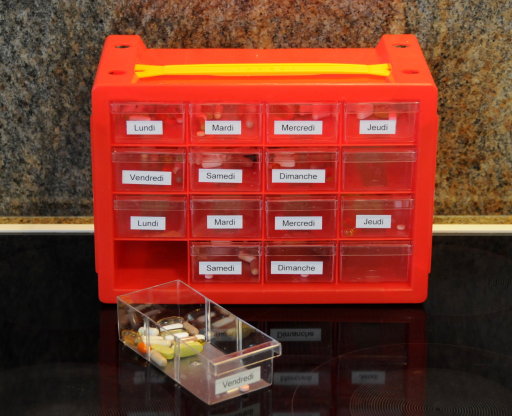
Keeping all of these pills straight is a challenge. You do not want to take them from their individual bottles every day, keeping track of how many from which you wish to swallow—that'll take way too long, opening and capping bottles, shaking pills out, and hoping you've counted correctly lest you underdose and wilt away or overdose and turn into a Klingon. The best approach is to sort your supplements into ranks by number per day, then deposit them in “pill boxes” to be taken every day. There are a wide variety of pill boxes on the market, but few have the capacity to handle multiple “horse pills” such as fish oil, calcium, and magnesium supplements. I've found a general purpose parts bin works fine for this application. I use one with 16 drawers, which I've labeled for the days of the week for two weeks, leaving two drawers unused. Every week, after finishing the drawer for Sunday, I reload that week's drawers with the pills for the week after next. This provides a week-long buffer so that if I run out of something filling up the trays I'll use a week from now, I have time to order and receive a new supply before coming up short.
I eat only once a day. This is a habit I acquired back in the bronze age of computing, but is now considered a variant of “intermittent fasting”, which some consider as promoting longevity. Whatever…. I use no dividers in the drawers of my pill cabinet because I take all of the pills with my one daily meal. If you, as many folks, indulge in the feedbag thrice a day, you can apportion your supplements accordingly using the slots in the trays. Note, however, that some of these cabinets are sold with insufficient separators to divide all of the trays into the three compartments provided for, so you may have to buy or improvise additional dividers.
Hendler, Sheldon Saul with David Rorvik. PDR for Nutritional Supplements. 2nd. ed. Montvale, NJ: Physicians' Desk Reference, [2001] 2008. ISBN 978-1-56363-710-0.
Initial posting.
Minor corrections and edits.
Modified Vitamin E dose to 400 IU/day from 800 and changed the link to a mixed tocopherol and tocotrienol product.
Revised CSS so table borders display in Safari. This makes them more ugly in every other browser; thank you, Apple!
Removed iron supplement. Assiduous readers have persuaded me that iron supplementation is unnecessary except for menstruating women and other obvious conditions leading to iron deficiency and may be pernicious otherwise.
Corrected the nationality of the discoverer of Vitamin K. It was discovered by Henrik Dam of Denmark. Thanks to Thomas Knudsen for pointing out this error.
Added contraindications for Nattokinase.
Added description of Vitamin D blood serum test and recommendation for target level.
Revised Calcium+Magnesium supplement description to clarify options for those who eat dairy products and those who forswear them.
Added Zeaxanthin+Lutein and Bladderwrack supplements.
Added Astaxanthin supplement.
Added References section.
Revised Vitamin D-3 supplement from 2000 IU to 4000 IU.
Removed the “Perfusion/Anticoagulants” section and the recommendation of Nattokinase. This supplement can be beneficial for some people, but for those at risk of stroke or other leaky blood vessel problems I believe it should be used only on the advice of a physician. I have ceased taking it myself, and perceived no difference in my health.
Removed Aniracetam supplement. It has become difficult to obtain and I notice no difference in using Piracetam exclusively.
Added L-Huperzine A. I have been taking this nootropic for several months in a relatively low dose and have observed a perceptible improvement in short-term memory storage and retrieval.
Adjusted dosage of Centrophenoxine to 1 g/day, which is what I have been taking recently. This is still a modest dosage, but for the moment I'm feeling smart enough.
Added Anatabine citrate supplement under the new category of “Anti-inflammatories” and moved Omega-3 Fish Oil there, where it belongs better than under “Vitamins”.
Removed Anatabine citrate supplement. This product has been withdrawn from the market not due to any safety concerns, but as a result of the U.S. Food and Drug Administration exploiting a political scandal to take a shot against the nutritional supplements market, which it would dearly like to shut down or strangle with regulation. I will miss this anti-inflammatory and nootropic.
Changed source of Centrophenoxine supplement to new vendor since the previous one seems to be chronically out of stock. Adjusted dose from 1 gram to 400 mg because I don't want to swallow more than two of these tiny little capsules a day.
Changed source of L-Huperzine A supplement to new vendor since the previous one seems to be chronically out of stock. Adjusted dose from 100 μg to 200 μg per day because that's how much is in the pills they sell.
Removed Piracetam supplement. It was great, but it's just too difficult to consistently obtain.
In the discussion of Vitamin D-3, removed the phrase “Not having the blood work done” because now I have.
Changed multivitamin recommendation to an iron-free product available on-line.
Added Quercetin supplement under antioxidants. It's another one which falls into multiple categories, but its action is best documented as an antioxidant.
Added Glucosamine/Chondroitin/MSM supplement under anti-inflammatories.
Revised Vitamin D-3 supplement from 4000 IU back down to 2000 IU. Blood work (25-OH-D test) showed level too high, even in mid-winter, so I adjusted the supplement down.
Deleted Centrophenoxine. I presently have no source for this supplement.
|
by John Walker December, 2010 Revised December 12th, 2010 Revised January 7th, 2011 Revised January 22nd, 2011 Revised July 2nd, 2011 Revised August 29th, 2011 Revised September 18th, 2011 Revised February 1st, 2012 Revised February 21st, 2012 Revised June 21st, 2012 Revised August 4th, 2015 Revised February 25th, 2016 Revised January 11th, 2019 |
|

